AI / CHATBOTS
Help visitors get answers and reach the right person
Design a conversation that gives visitors useful progress and gives the sales team the right context.
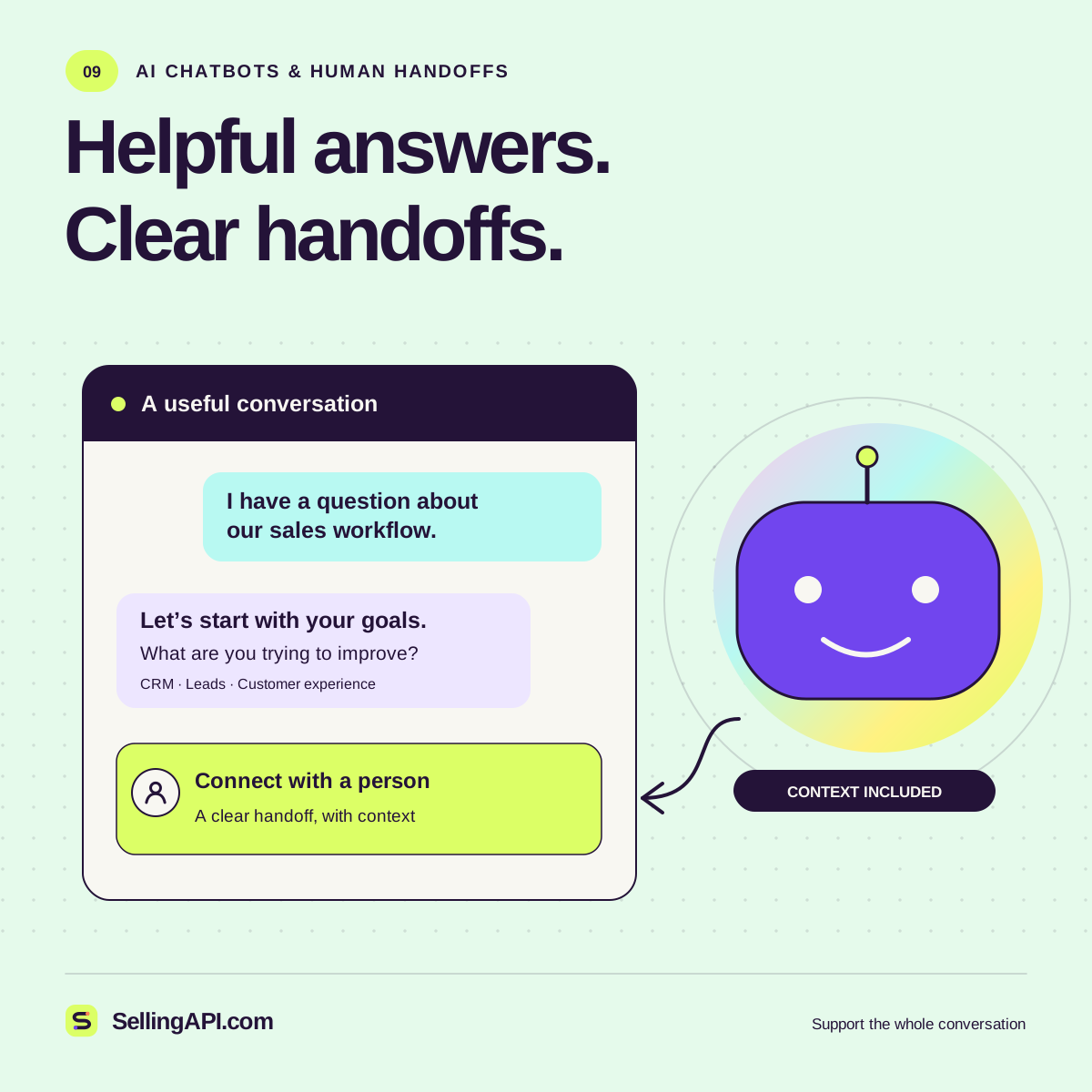
An AI chatbot selling API is a useful fit for recurring product questions and clearly defined inbound requests. Begin by deciding what a visitor should be able to understand or accomplish in the conversation. Keep public education available before asking for details needed only for a later sales handoff.
Choose a knowledge scope you can maintain
Gather approved feature explanations, integration references, and implementation requirements for the intended audience. Assign an owner and review date to each source. Decide which version wins when two documents conflict and what the chatbot should say when neither answers the question.
OpenAI's retrieval documentation describes semantic search for related information. Use that capability within a deliberate content collection, then review whether each answer is supported by the passage it cites.
Define the answer and the handoff together
A practical response contract includes the visitor's question, a supported answer, source references, remaining uncertainty, and an optional next step. For a handoff, add confirmed requirements, contact preferences, the receiving team, and the actual submission state.
Ask questions only when their answers change the response or routing. Someone comparing integrations may need a technical reference, while someone requesting a consultation may need an owner. Let the visitor correct the summary before submitting a request.
Keep context useful and access bounded
OpenAI's conversation state guide covers ways to manage prior context. Design your application to preserve confirmed details and accept corrections without mixing sessions. A company name in chat does not itself authorize access to private account records.
Start with grounded public answers before connecting actions. The local chat demonstration helps explore conversational structure; a production assistant needs your own knowledge collection, authorized integrations, and operating process for failures and handoffs.
A useful starting workflow
Define a visitor goal
Choose a recurring question or request. Collect the approved information needed to resolve it, including the limits of what the chatbot can establish.
Shape the exchange
Write a short answer contract, useful clarification rules, and an obvious handoff route. Test corrections, missing references, and requests that change direction.
Review real usefulness
Evaluate supported answers, repeated questions, successful routing, and operator corrections. Update the knowledge collection and workflow together when product information or team responsibilities change.
Sources & further reading
Before you connect
A few useful answers.
Should a chatbot collect an email address immediately?
Only if it is needed for the visitor's chosen task. A public product answer can often be provided first, with contact details requested when a follow-up is actually wanted.
What happens when the knowledge base has no answer?
Explain what is established, identify the missing detail, and offer a useful route to someone who can verify it. Do not turn a nearby document into an unsupported product promise.