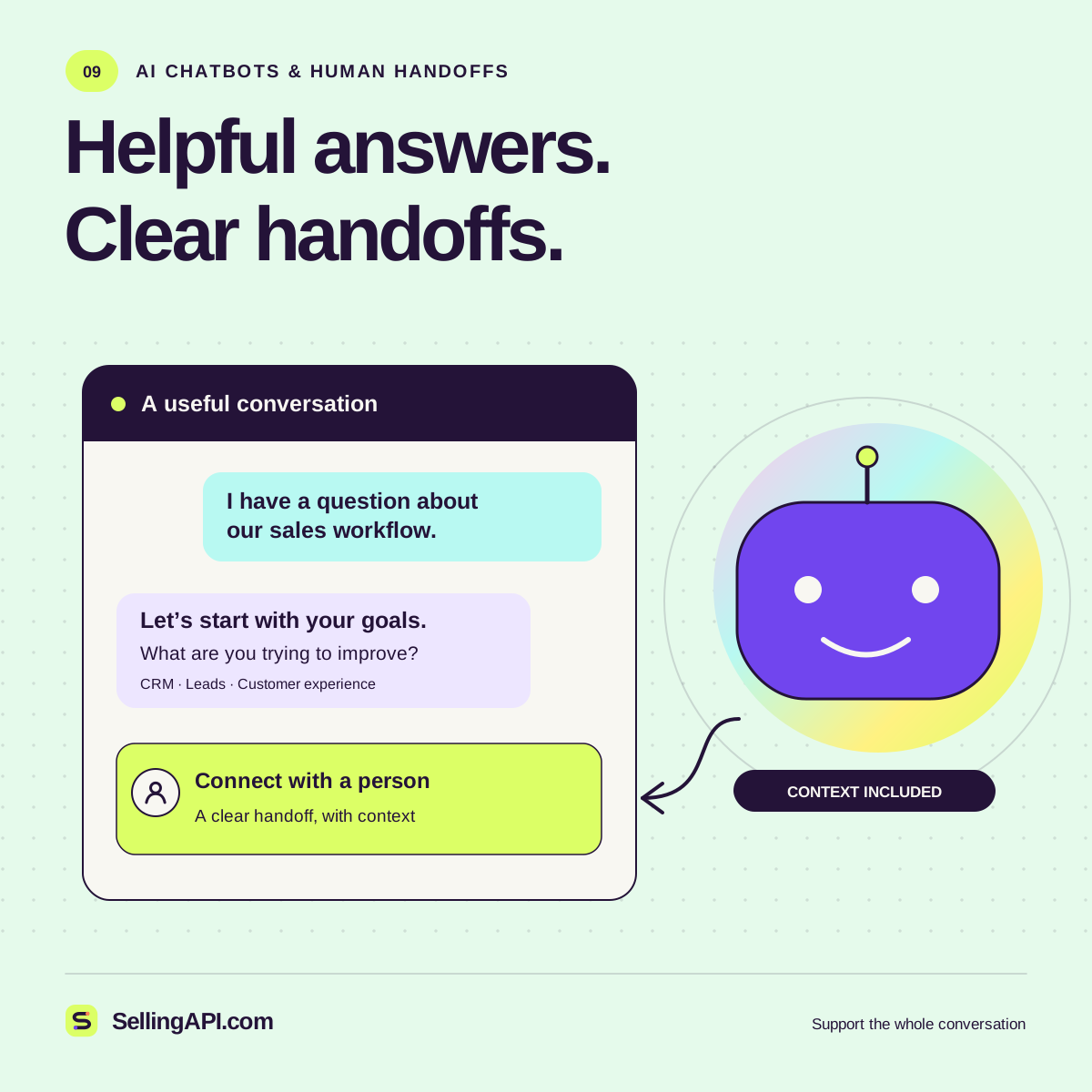
An AI chatbot selling API can connect a website conversation to product knowledge and the sales process. Its role should be easy for visitors to understand: explain something, help compare options, or route a specific request. A useful chatbot gives people progress before it asks them to become leads. Designing that experience requires decisions about knowledge, conversation state, identity, and the handoff between software and a person.
Separate three kinds of conversation
Product education, qualification, and account actions have different requirements. A visitor reading public integration documentation does not need the same identity checks as a customer requesting a private proposal. Make the transition between those activities clear. This keeps the conversation relevant and helps the application apply the appropriate rules.
| Conversation | Useful outcome | Design priority |
|---|---|---|
| Learn | A supported answer or comparison | Relevant, current public information |
| Qualify | A request matched to the right team | Purposeful questions and clear preferences |
| Act | A verified change or confirmed next step | Identity, permission, and reliable status |
A visitor should be able to ask a second product question without restarting the interaction or supplying an email address solely to continue learning.
Build a knowledge collection the team can maintain
Start with approved product explanations, integration guides, implementation requirements, and commercial information suitable for the intended audience. Assign an owner and review date to each source. Split broad documents where necessary so the chatbot can retrieve a relevant passage with enough surrounding context to interpret it correctly.
OpenAI's retrieval documentation describes semantic search, which can find related information without requiring exact keyword matches. That capability is useful when visitors describe a feature in everyday language. Retrieval still needs editorial choices: which collection is eligible, how conflicting versions are handled, and what to do when the available material does not establish an answer. Search relevance and factual support are separate things to review.
Make the answer traceable
Ask the chatbot to link to the relevant public reference and keep the answer proportionate to what that reference supports. A page describing data export does not automatically support a promise about every destination format or a customer's custom environment. When a question crosses that boundary, explain the documented capability and identify the remaining implementation question.
For example, a buyer asks whether a lead can be assigned to different teams by region. The bot can describe the documented routing approach and ask which regional rule the buyer needs. If the source does not establish how exceptions work, it should prepare that question for a specialist. This offers a concrete path forward while preserving the distinction between a product fact and a proposed configuration.
Qualify with a reason for every question
Decide what information changes the routing decision. A technical integration request may need the CRM name and deployment context. A pricing request may need a relevant usage estimate. A general product question may need neither. Ask the smallest useful set of questions and explain the purpose when it is not apparent.
Keep answers optional when they are not essential. A visitor who prefers email should not have to accept a phone call to receive a response. Preserve explicit preferences in the handoff, and do not infer permission for unrelated contact from ordinary conversation. Show a concise review of the request before submission so the visitor can correct the details. This makes the eventual record more useful to the sales team.
Protect the boundary around account information
A company name typed into chat is useful context, but it does not verify the visitor's right to see that company's private records. Apply identity and permission checks in application code before retrieving account information. Keep public product answering available independently when private access is unavailable. This avoids turning a failed account check into a dead end for the whole conversation.
External documents and user messages can also contain instructions that attempt to change the assistant's behavior. OpenAI's agent safety guidance describes this prompt-injection risk. For a chatbot, treat retrieved content as evidence rather than permission. Validate tool arguments, restrict what each operation can access, and require the appropriate review before actions that commit the business.
Use conversation memory deliberately
A multi-turn conversation needs a clear record of what has been established. OpenAI's conversation state documentation explains ways to supply or manage prior context. In your application, keep confirmed customer details separate from tentative interpretations. A correction should update the working context instead of leaving two incompatible versions equally prominent.
Summaries should preserve open questions, preferences, and unfinished actions, not only the most recent topic. Avoid carrying private details from one visitor's session into another. Provide an obvious way to begin again, and decide how long conversation information is needed for the declared workflow. The memory design should help a visitor avoid repetition while giving operators a clear account of how a recommendation was reached.
Match the interface to the conversation
Use interface controls when they make a choice easier to understand. A short list of integration categories can help a visitor find the right documentation, while free text remains useful for describing an unusual requirement. Give every button a clear outcome and allow the visitor to revise an earlier choice. The conversation should not force someone to keep navigating a path that no longer fits.
Keep source links readable and make it easy to inspect an answer without losing the conversation. Provide sensible behavior when a response is delayed, interrupted, or unavailable. A visible retry should preserve the visitor's question and avoid creating duplicate requests. Test the experience on a narrow screen and with keyboard navigation, including opening references and reaching the handoff controls. A capable answer is only useful when the surrounding interface lets a person read it, understand its status, and take the next step they intended.
Make handoff a first-class outcome
A handoff is successful when the next person knows what the visitor needs and the visitor knows what happens next. Include the request, confirmed details, source references, relevant preferences, and unresolved issues. Report whether the request has been submitted, assigned, or merely prepared. Those states should come from the application that owns the process.
Before launch, review conversations that include missing documentation, account ambiguity, declined follow-up, and failed tools. Measure supported answers, useful routing, corrections, and repeated questions. Inspect abandoned conversations for possible friction without assuming every departure is a failure; the visitor may have received the answer they needed. Improve the chatbot through the same editorial and operational ownership you would apply to a public product page and a sales intake process.