LEADS / PRIORITIZATION
Prioritize leads with reasons your team can explain
Turn qualified signals into a reviewable next step, with the evidence behind every score.
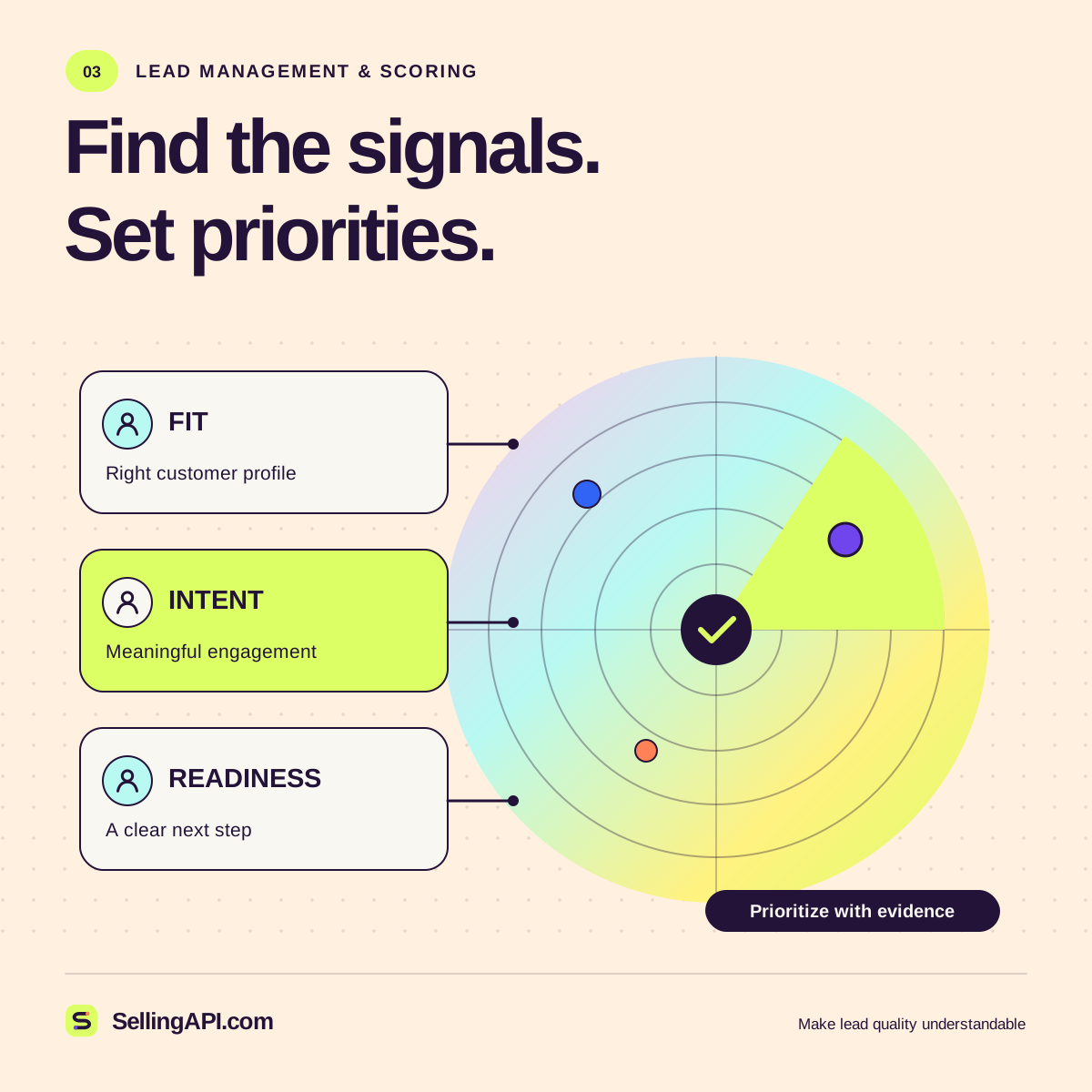
A lead selling API workflow can help a team organize incoming requests, apply a consistent prioritization rule, and route the result to an owner. It works best when the business can explain what makes a request relevant. Begin with a clear decision, such as who should review an inquiry next, instead of an unexplained universal score.
Separate fit from recent activity
Use fit to describe how a stated requirement matches what the business can serve. Use engagement to describe meaningful recent actions. HubSpot's scoring documentation distinguishes fit, engagement, and combined scores, providing a useful example of keeping these dimensions visible.
For a pilot, choose inputs such as requested integration, serviceable region, explicit project timing, and a request for a conversation. Keep unknown values separate from negative evidence.
Design a score with an explanation
Return the score, rule version, contributing signals, missing information, recommended owner, and proposed next action. An account manager should be able to understand the result without reverse-engineering the calculation. Keep a route for requests that are unusual but potentially useful.
Use the local scoring tool to compare illustrative assumptions. Its result is a planning exercise, so calibrate your own rules against reviewed outcomes before using them to allocate real sales attention.
Connect priority to a clear lifecycle
A score is useful when it leads to a defined responsibility. Specify when a request is new, under review, awaiting information, or ready for another stage. Consult the Salesforce lead documentation when mapping that process to its lead records.
Review stale records and explicit contact preferences alongside priority. A high score should not erase a request to pause. Track corrections and routing outcomes so the process can improve without silently changing its rules.
A useful starting workflow
Choose meaningful signals
Agree on the business question, the available evidence, and which inputs are relevant. Document how unknown or outdated information affects the decision.
Explain the recommendation
Calculate a transparent result and present its contributing signals. Let the reviewer correct the record or choose a different next step with a reason.
Review the outcomes
Compare accepted and corrected recommendations. Inspect overlooked requests and update the rules with a recorded version so changes can be evaluated fairly.
Sources & further reading
Before you connect
A few useful answers.
Is a lead score a purchase probability?
A points-based planning score is not a calibrated probability. Label what it represents and use a separate validation process before presenting any score as a likelihood of purchase.
What should happen when information is missing?
Preserve the missing value and identify whether it changes routing. Ask a useful clarification when necessary, or send the request for review rather than inventing an answer.