CONVERSATIONS / PROMPTS
Write prompts that keep the conversation useful
Give the assistant a clear job, the right context, and an appropriate stopping point.
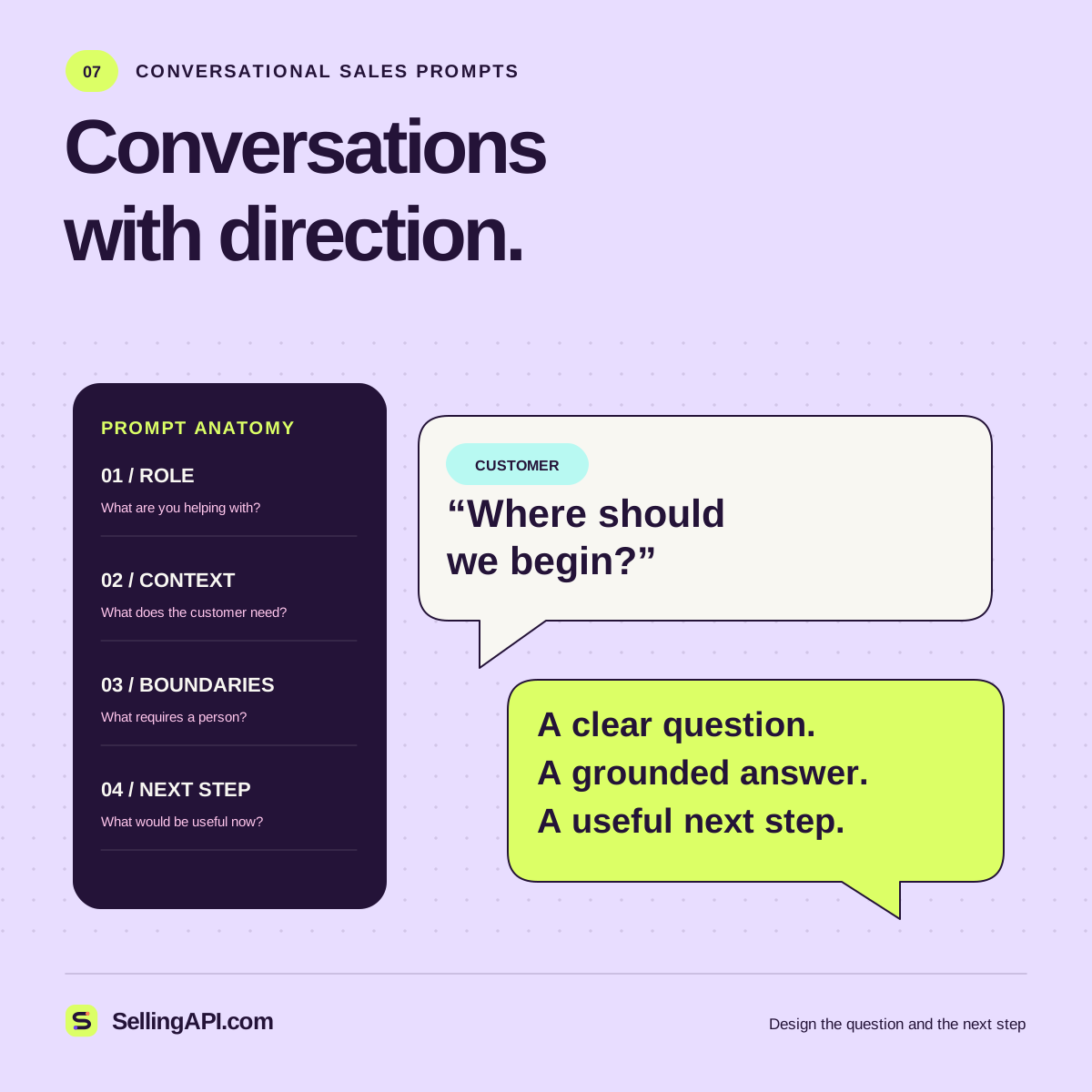
Conversational sales prompts are useful when a team needs consistent assistance with discovery, product explanations, objection handling, or follow-up. Begin with what the customer is trying to understand. Then specify how the assistant can help, what evidence it may use, and which unresolved decisions belong with a person.
Build a compact conversation brief
Describe the audience, conversation stage, immediate task, approved references, and response format. OpenAI's prompting guidance discusses clear instructions, examples, and context. Keep those parts readable so an owner can review and maintain the prompt.
A discovery assistant might identify the stated goal, answer supported questions, and ask one clarification that changes the recommendation. Mark assumptions separately. Avoid adding an intake question just because a field exists in the CRM.
Ask for a result the next person can use
Choose an output such as a concise draft reply, supporting facts, open questions, and a suggested next step. For an account manager, add the reason a clarification matters. For a customer-facing response, keep internal notes outside the message itself.
Use the local prompt builder to assemble an editable starting point. Adapt it to your product references, audience, and review rules before use. Keep price, timing, and contractual claims tied to approved evidence rather than confident wording.
Evaluate the exchange across several turns
Test what happens when the buyer corrects a detail, changes goals, declines a meeting, or asks about an undocumented feature. OpenAI's evaluation guidance recommends task-specific assessment and human feedback. Use those principles to inspect behavior, not merely fluency.
Version the prompt with its examples and review notes. Compare revisions on the same cases, then add new cases when real use reveals a gap. A shorter, relevant exchange may be more successful than a long conversation that never resolves the question.
A useful starting workflow
Name the immediate job
Choose one task and describe a useful result from the customer's perspective. Identify the facts needed, the likely uncertainties, and the responsible reviewer.
Write and adapt
Separate purpose, evidence, behavior, authority, and output. Add examples of supported answers and responsible uncertainty, then tailor the language to the channel and audience.
Compare complete conversations
Review relevance, factual support, repeated questions, corrections, and the next step. Retain a prompt revision only when it improves the behavior the team actually needs.
Sources & further reading
Before you connect
A few useful answers.
Can one prompt serve email, chat, and voice?
A shared policy and knowledge foundation can help, but each channel needs its own interaction rules. Adapt length, turn-taking, formatting, confirmations, and the amount of context presented at once.
When should the prompt be updated?
Review it when product facts, workflow rules, audience needs, or model behavior change. Keep a named owner and a repeatable set of examples so updates can be assessed consistently.