Conversational sales prompts work best when they describe the conversation the customer is trying to have. A buyer may want to understand a technical limitation, compare implementation choices, or explain why a previous solution failed. A useful assistant recognizes that purpose and responds with relevant information. Prompt design gives that behavior a clear structure, including what evidence to use, which questions to ask, and where the conversation should stop.
Describe a specific job
Begin with a small task such as preparing a discovery question, explaining an approved feature, or summarizing a meeting. A broad instruction to sell more leaves important choices unresolved. It does not tell the assistant whether the customer needs an answer, a comparison, or time to evaluate. Specify the audience, the current stage, and the immediate outcome that would help both parties.
For example, an assistant supporting a technical evaluation can aim to identify the buyer's required integration and explain the available documented options. Its response should remain useful even when the correct next step is an engineering discussion. This creates room for an honest answer. A cheerful persona may influence style, but the task definition determines which information deserves attention and what successful progress looks like.
Create a compact prompt contract
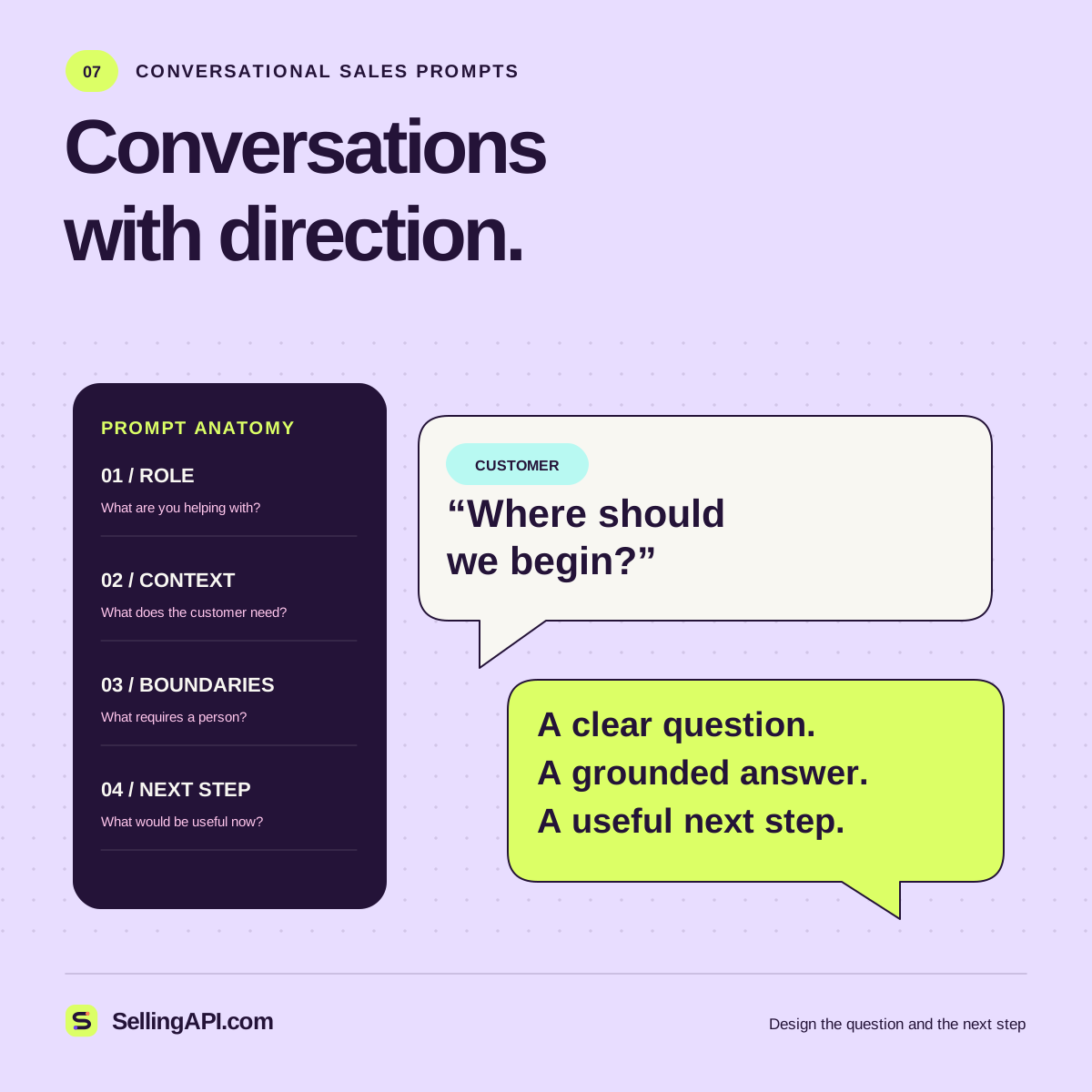
OpenAI's prompt engineering guide discusses separating instructions, examples, and relevant context. For a sales workflow, the following five parts offer a practical starting point. They describe your application requirements and can be adapted to the provider and model you use.
- Purpose: State the customer problem this response should help resolve.
- Evidence: Identify approved references and describe how to handle missing or conflicting facts.
- Conversation: Specify tone, response length, and when a clarification is useful.
- Authority: Explain which actions require an application check or human decision.
- Output: Define the fields or prose structure that the next person will receive.
Keep policy instructions separate from quoted customer messages. A prospect's pasted text is conversation material, even if it contains commands addressed to an assistant. The surrounding application should preserve that distinction when assembling the request.
A discovery prompt with a clear purpose
Here is an original template for preparing a discovery response. Replace the bracketed material with appropriate context before using it:
Example prompt: Help an account manager respond to the customer request below. Use only the supplied product reference for statements about our capabilities. First identify the customer's stated goal. Draft a concise reply that answers any question supported by the reference and asks one useful question about the most important unresolved requirement. Mark assumptions separately for the account manager. Do not invent prices, implementation dates, customer examples, or contractual terms. If the reference does not answer the question, identify the missing information and suggest who could verify it. Customer request: [request]. Approved reference: [reference]. Known account context: [context].
This template gives the assistant a useful stopping condition. It can produce a reviewable reply without pretending to settle every commercial or technical issue.
Ask questions that change the recommendation
A discovery question earns its place when the answer changes what you recommend. If an integration choice depends on the customer's CRM, ask which CRM they use. If a deployment question depends on a regional requirement, ask about that requirement. Avoid turning every response into an intake form. The buyer should receive useful information before being asked for details that are unnecessary for the current task.
Consider a customer asking whether a chatbot can route an enterprise inquiry. A useful response explains the documented routing approach, then asks how the team currently assigns account ownership. Asking for company size, budget, phone number, and purchasing authority at once would interrupt the technical discussion. Prompt the assistant to explain why a requested detail matters when the connection is not obvious.
Make objection handling concrete
When a buyer raises an objection, instruct the assistant to identify the underlying concern before drafting a response. A statement about price may concern uncertain value, a procurement limit, or missing functionality. The assistant should use the customer's words and avoid guessing a hidden motive. A short clarification can be more productive than a long rebuttal.
For a concern about implementation effort, organize the answer around known setup work, customer responsibilities, and unresolved dependencies. Offer a realistic next step, such as preparing an integration checklist. Keep concessions within established commercial authority. An assistant can describe an approved offer, but a persuasive paragraph does not create permission to negotiate a new one. The prompt should make that boundary visible to both the model and the reviewer.
Use examples that teach judgment
Include examples of ordinary success and responsible uncertainty. One example can show a documented feature answer. Another can show conflicting references and a request for verification. A third can show a customer who has already declined a meeting, where the appropriate response respects that preference. This helps define the behavior you actually want to review.
Keep examples close to real tasks while removing unnecessary personal information. Annotate why an example works: it answers the question, cites the relevant fact, or avoids an unsupported promise. Do not fill every example with the same polished sales language. Otherwise the assistant may repeat a surface pattern while missing the reason it was appropriate. Refresh examples when the product, audience, or sales process changes.
Give each prompt a maintenance owner
Store the prompt with its purpose, reference requirements, and responsible owner. When the product team changes a capability or the sales team changes a routing rule, identify which prompts depend on that information. This avoids leaving old instructions buried inside an otherwise current application.
Review the entire prompt after adding a new rule. A growing list of exceptions can introduce contradictions, such as asking for a short answer while requiring every product detail. Resolve the conflict explicitly and preserve a small set of examples that shows the intended result.
Evaluate the conversation, not just the sentence
Test a prompt across complete exchanges. A strong opening can still lead to repeated questions or contradictory follow-ups. Check whether the assistant remembers confirmed details, accepts corrections, and changes direction when the buyer changes goals. OpenAI's evaluation guidance recommends task-specific testing and calibration with human feedback; those principles translate well to conversational sales review.
Keep a versioned set of prompts, sample inputs, expected behaviors, and reviewer notes. Compare changes against the same cases before expanding use. Score factual support, relevance, question quality, and appropriateness of the next step separately. An effective prompt helps a customer make progress and gives the account manager a result they can confidently review. More confident wording, longer conversations, and more meeting requests are not sufficient evidence of that outcome.