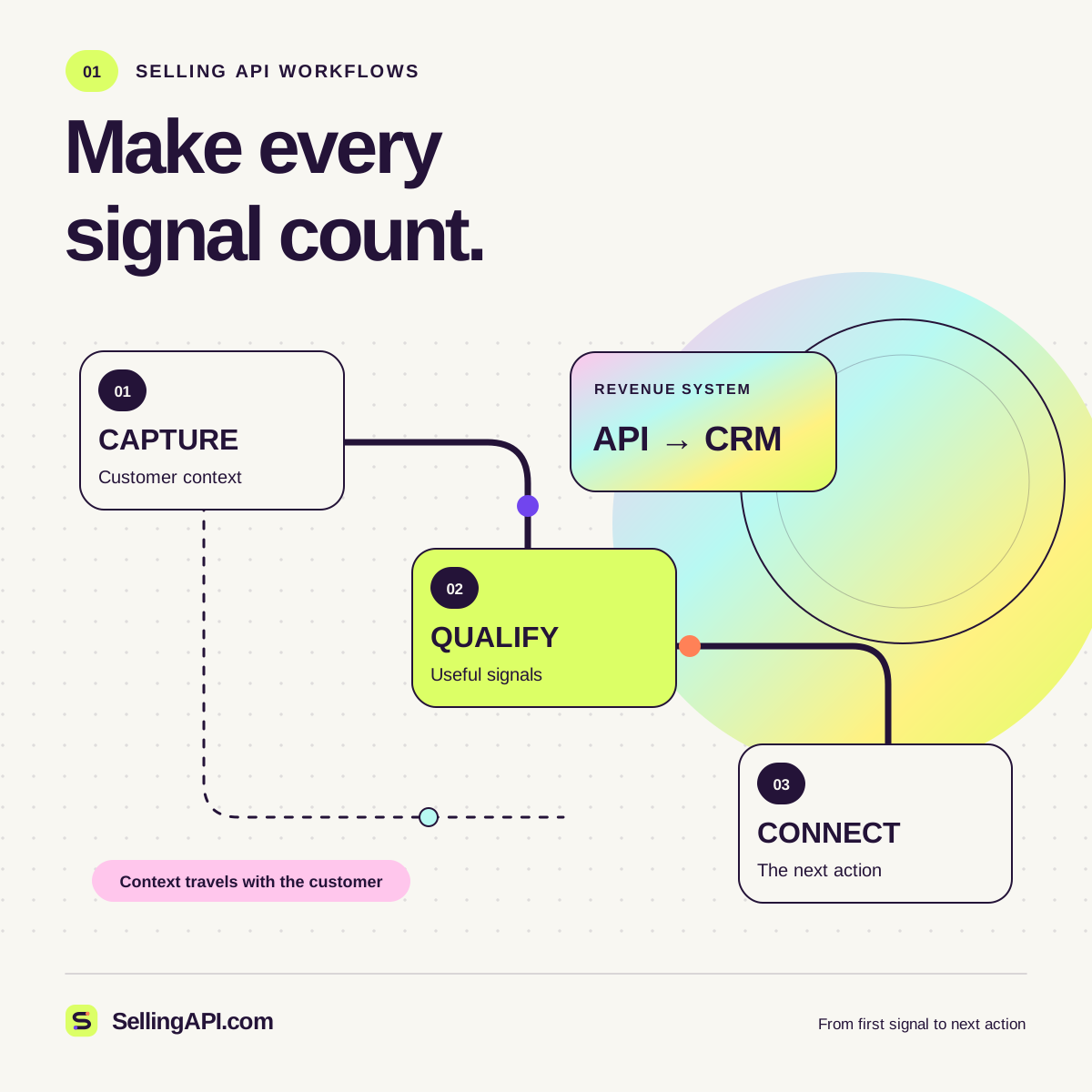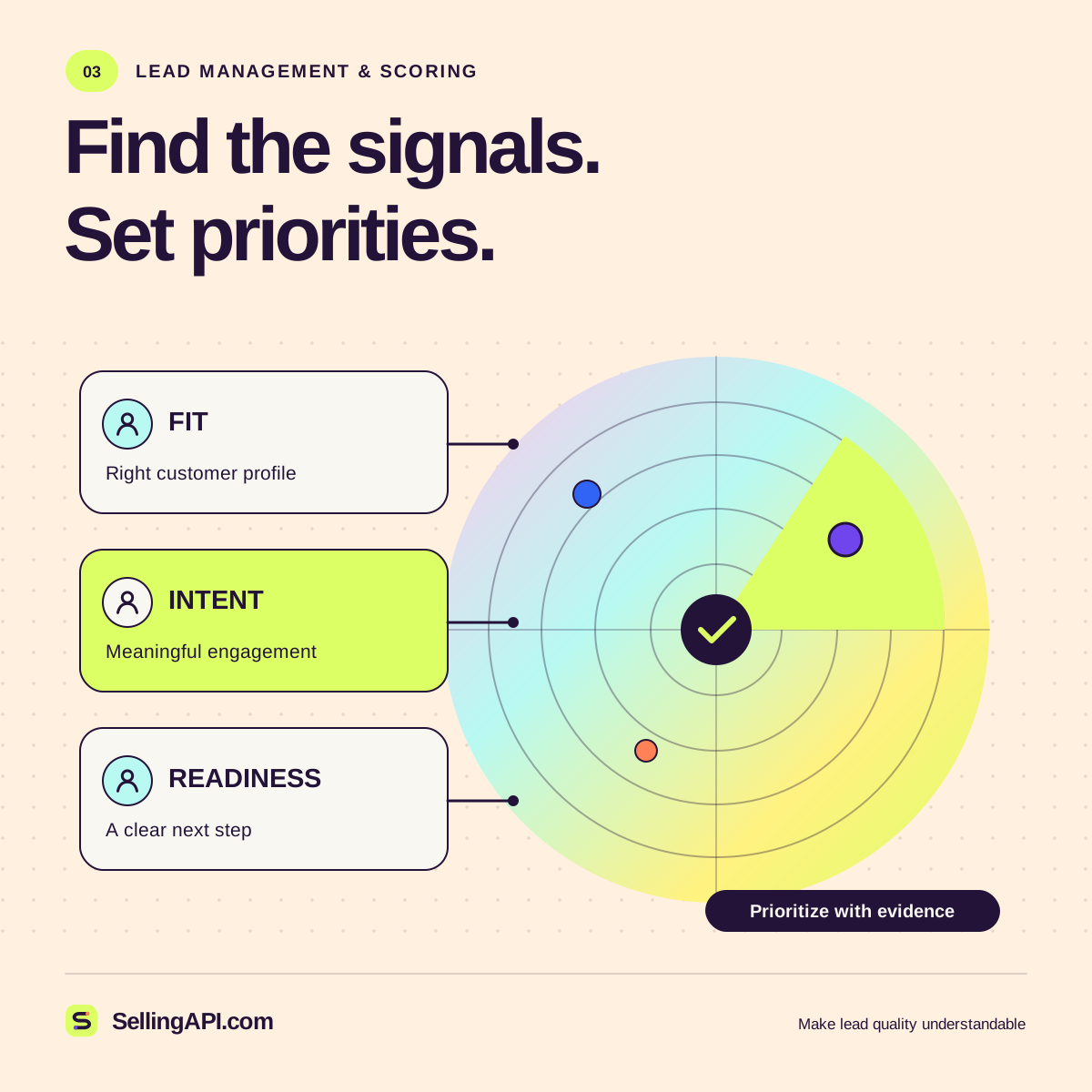
A lead management API moves inquiries through intake, qualification, assignment and follow-up. A scoring layer can help organize that work, but the score is only a decision aid. A prospect with many tracked interactions may still have no relevant project, while someone who submits one specific question may be ready for a useful conversation.
The goal is to make prioritization explainable. A representative should understand why a record entered a queue, what evidence supports the decision, and what remains unknown. This guide develops an illustrative scoring approach for planning and local experimentation, rather than presenting a production SellingAPI scoring service.
Start with intake quality
Capture the original inquiry, its time, its source and the person's stated preferences. Keep the submitted information separate from later enrichment or interpretation. That distinction allows a reviewer to tell what the person actually said from what a system inferred.
Validate structure without pretending validation proves identity or intent. An email address with a plausible format can still be incorrect. A company name can be ambiguous. Flag uncertainty instead of quietly inventing missing values. Preserve enough provenance to correct an error when the same record reaches a CRM, an analytics report and a representative's task list.
Separate fit from engagement
Fit asks whether the organization and stated need align with what the business can provide. Engagement asks what relevant actions have occurred. These are different questions. HubSpot's lead scoring documentation distinguishes fit and engagement scores and describes combined scores. The separation is useful even when you build your own simple rules.
Keep both dimensions visible. A highly engaged student researching a project may deserve a helpful educational response without entering a commercial qualification queue. A good-fit company with little recent activity may belong in a slower review process. The workflow should choose an appropriate next action, rather than treating every low score as a person to ignore.
Build a small illustrative scorecard
Begin with a handful of rules a team can debate. The following numbers are fictional examples, not researched performance weights or recommendations for a particular business:
| Observed signal | Example treatment |
|---|---|
| Stated need matches a supported use case | Add 20 fit points |
| Organization meets an agreed service criterion | Add 10 fit points |
| Person requests a product conversation | Add 25 engagement points |
| Person submits a specific technical question | Add 10 engagement points |
| Contact channel is suppressed | Block that channel regardless of points |
Do not turn a communication restriction into a small negative score that other points can outweigh. Eligibility and ranking are separate decisions. Evaluate whether an action is permitted first; only then use a score to help order eligible work.
Handle time and uncertainty explicitly
Interest can change. An inquiry from yesterday and a download from last year should not automatically contribute the same evidence. Define a time window or decay policy appropriate to your sales cycle, and display the date of the latest meaningful signal. A score without a timestamp is easy to misread.
Unknown fit should remain unknown until evidence arrives. Avoid assigning a confident low rating because a small organization has fewer public details. Consider a separate completeness indicator. That lets a representative distinguish “unlikely to match” from “not enough information to judge” and ask a useful question instead of drawing an unsupported conclusion.
Choose signals that mean something
A request for a meeting, a substantive reply and a stated project requirement provide different evidence from an image load in an email. Apple's Mail privacy documentation explains that remote content can be downloaded in the background rather than when a person views a message. The practical inference is that an apparent open should not be treated as certain human intent.
Define the business meaning of each signal before assigning points. Put caps on repetitive low-value activity so repeated events cannot dominate the score. Review which signals are generated by internal testing, automated systems or duplicate submissions. A precise-looking number can still be based on noisy observations.
Deduplicate before creating work
Use stable inquiry identifiers and maintain links between related records. A person might submit a form twice or contact the team through two channels. Avoid merging records solely because names look similar, but also avoid sending two representatives to respond independently to the same request.
Route with more than a score. Product area, service coverage, existing account ownership, language needs and representative capacity may all affect the correct destination. An illustrative rule could send a qualified technical inquiry to the existing account owner with a specialist copied into the internal task. A routing result should explain which rule selected the owner.
Keep priority separate from workload. If the highest-priority queue contains more inquiries than the team can review, changing the threshold alone does not create capacity. Set an escalation path for aging requests and distinguish a delayed response from a rejected lead. Give the receiving team a way to signal availability. That feedback helps operations adjust assignment while preserving the evidence that originally made the inquiry worth reviewing.
Make the handoff actionable
Send the reviewer a compact evidence package: the original inquiry, the relevant fit signals, the recent engagement, the current communication preference and one proposed next step. “Score 72” is less useful than “Requested a discussion about migrating an existing CRM; product fit confirmed; implementation timing unknown.”
Allow the representative to accept, reassign or return the record with a reason. Keep qualification distinct from CRM conversion. Salesforce's lead documentation describes converting qualified lead records into contacts and accounts. Your team's criteria should determine when that change represents the relationship accurately.
Evaluate the process against outcomes
Review a sample of prioritized records and a sample below the threshold. Otherwise you only learn about the people the existing rules already favored. Ask whether reviewers found the inquiry relevant, whether the next step was appropriate, and whether the record had enough information for a decision.
Track practical measures such as time to review, accepted handoffs, duplicate assignments and reasons for rejection. Keep the scoring rule version with each decision so changes can be compared fairly. Avoid using later outcomes as if they were known at the original scoring moment; that makes historical evaluation misleading.
Improve with accountability
Begin with transparent rules and review disagreements before adding a complex model. If AI proposes a category or summary, retain the supporting text and let a person correct it. Treat missing evidence and contradictory signals as reasons for further review.
A good lead management API helps the team deliver the right response with clear ownership. Its success is visible in understandable records and useful conversations. The score supports those outcomes when it stays connected to evidence, permission and an explicit next action.