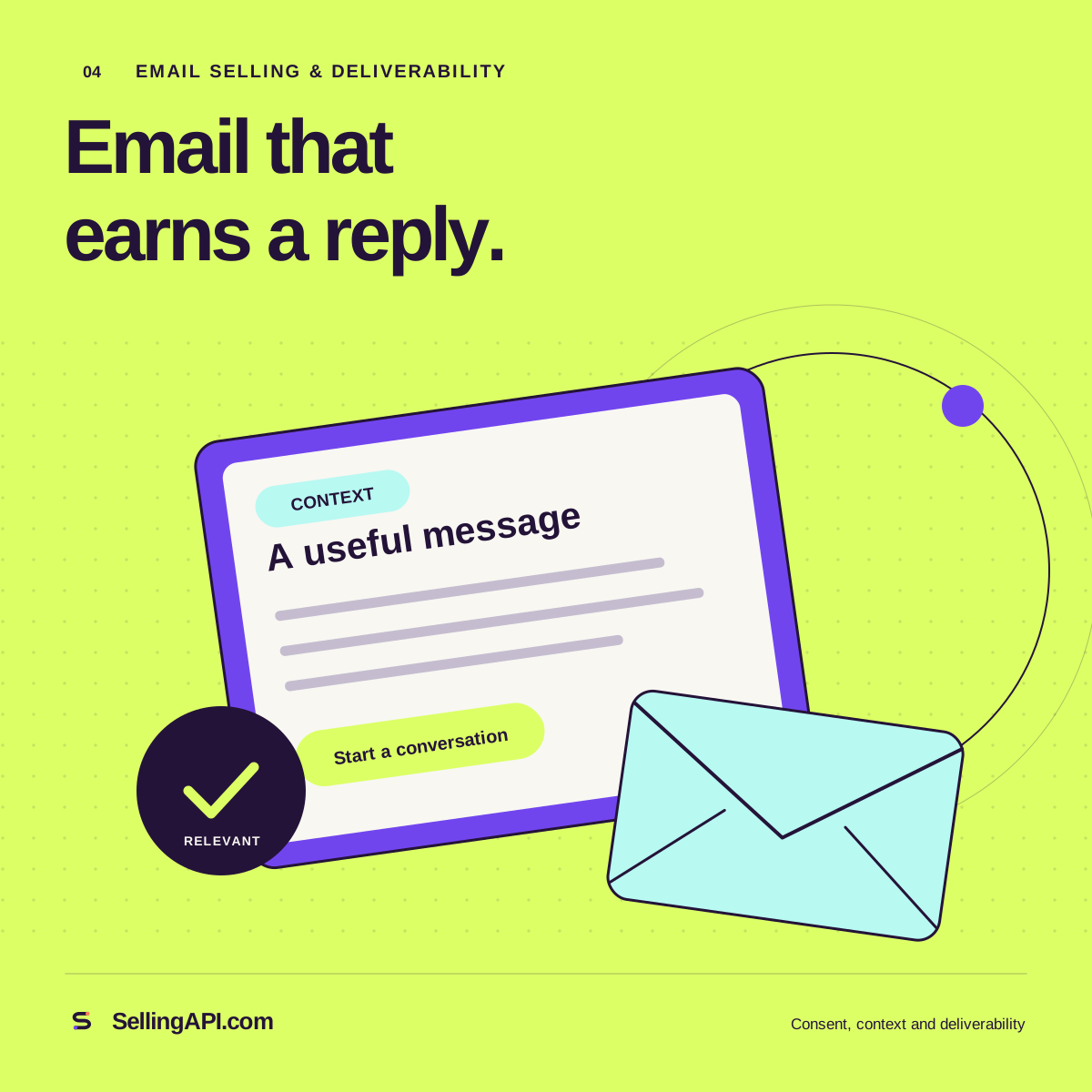
An email sales API lets an application request a message, inspect a provider response and receive delivery events. That interface is only one part of an effective sending system. Recipient expectations, domain configuration, message quality and reliable handling of opt-outs all affect whether the workflow serves the intended conversation.
This guide focuses on general engineering and deliverability practice. SellingAPI.com offers educational content and local planning tools; it does not send email or establish a provider account. Before operating a real workflow, apply the requirements of your provider, your organization and the places where you communicate.
Understand what each delivery state means
An API may accept a request before the message reaches a receiving mail server. A later event may report delivery, delay or rejection. Even successful server delivery does not establish that a person saw the message or that it reached a particular inbox folder.
The SMTP standard, RFC 5321, describes mail transport and server replies. Your application should preserve the provider's documented distinctions instead of reducing every accepted request to “customer contacted.” Keep separate states for requested, accepted, deferred, delivered, bounced and suppressed when the provider supports them. Explain these labels in operational reports so sales users do not mistake transport status for engagement.
Authenticate the sending domain
Domain authentication gives receiving systems evidence about the sender. SPF identifies authorized sending infrastructure, DKIM signs messages, and DMARC connects authentication to the visible From domain and a published policy. Set up the configuration documented by your email provider and verify actual messages after changes.
Google's sender guidelines specify requirements for messages to personal Gmail accounts, including authentication and additional requirements for bulk senders. Requirements vary by traffic and provider, so consult the current guidance rather than copying an old checklist. Authentication is a foundation, not an inbox-placement guarantee. Keep an inventory of every service sending on your domain so an overlooked system does not undermine otherwise correct configuration.
Start with recipient expectations
Record why a person should receive a particular message and which channel preferences apply. A requested technical follow-up, a subscribed newsletter and a product notification have different purposes. Separate those purposes in your data model so a single broad “contactable” flag does not authorize every kind of email.
For an illustrative workflow, store the source of the preference, when it was collected, its scope and the latest change. Check the relevant preference immediately before sending. If the person opts out while a campaign is queued, the next processing step should respect that change. Keep the original request available to reviewers when the appropriate follow-up is uncertain.
Make unsubscribe work across the workflow
A visible unsubscribe link and a supported one-click mechanism solve related but distinct problems. RFC 8058 defines a header-based signal for one-click list unsubscription using an HTTPS POST. Implement it through your provider's supported feature or carefully follow the standard; adding an arbitrary link to a footer is not equivalent.
Yahoo's sender best practices also describe unsubscribe expectations for applicable bulk traffic. Operationally, the important question is what happens after the request arrives. Update the authoritative preference, suppress pending messages within the relevant scope, and carry that decision into future imports. An old spreadsheet must not silently re-enable an address that has already opted out.
Treat suppressions as first-class records
Maintain a suppression reason, its source, its time and its scope. Reasons may include an opt-out, a provider complaint event or a permanent delivery problem. Apply the provider's documented handling to each event; do not assume all bounces require the same response.
Restrict who can remove suppressions and preserve the reason for a change. Avoid deleting suppression history during routine contact cleanup, since a later reimport could otherwise recreate the same sending problem. At the same time, retain only the information needed to enforce preferences and operate the service under your documented retention approach. A clean workflow needs both consistent enforcement and deliberate data handling.
Write messages that match the promise
Make the sender recognizable, the subject accurate and the requested next step easy to understand. If someone asked about an integration, answer that question before introducing unrelated products. Use readable text, descriptive links and a layout that works without images. Preview the message on narrow screens and review its plain-text alternative.
AI can help draft a response from approved facts, but a reviewer should check claims, links, names and tone. Avoid invented familiarity or a subject that implies a reply when no conversation exists. Personalization is useful when it reflects relevant information the recipient knowingly supplied; unnecessary detail can make an otherwise helpful message feel intrusive.
Process provider events reliably
Verify callbacks using the provider's documented authentication or signature method. Store the event identifier and update the corresponding message record. Build handling for duplicate events and delayed notifications. Where the provider offers a status lookup, use it to investigate messages that remain in a transitional state longer than expected.
A retry of your own send operation needs special care. If the request timed out after the provider accepted it, retrying blindly may send another message. Use the provider's idempotency support when available, or design a durable operation ledger and reconciliation process. Keep campaign identity separate from message identity so one recipient's retry does not accidentally restart an entire batch.
During troubleshooting, compare one affected message with a known successful example from the same workflow. Inspect its sender configuration, recipient preference, template version, request identifier and event history. Change one relevant factor at a time and record the result. This creates a useful explanation for the failure instead of a sequence of configuration changes whose effects cannot be separated.
Measure delivery and response separately
Track accepted messages, delivery failures, complaints, opt-outs and meaningful replies with clearly defined denominators. Compare similar cohorts and explain any missing events. Do not treat an open count as a reliable record of attention: Apple's Mail privacy guidance describes background loading of remote content, which limits what a tracking image can tell you.
Review representative messages alongside the numbers. A technically healthy campaign may still answer the wrong question. A small number of relevant replies can be more informative than a large volume of weak engagement signals. Set improvement goals around conversation quality and accurate follow-through, not just sending more requests.
Operate with clear controls
Before launch, verify domain settings, preference checks, unsubscribe processing, suppression imports and recovery after interruption. Assign someone to investigate provider errors and give the team an easy way to pause queued sending.
An email sales API becomes useful when every message has a legitimate purpose, an understandable status and an accountable owner. Reliable delivery work joins technical configuration with respectful communication, and keeps both visible as the system grows.