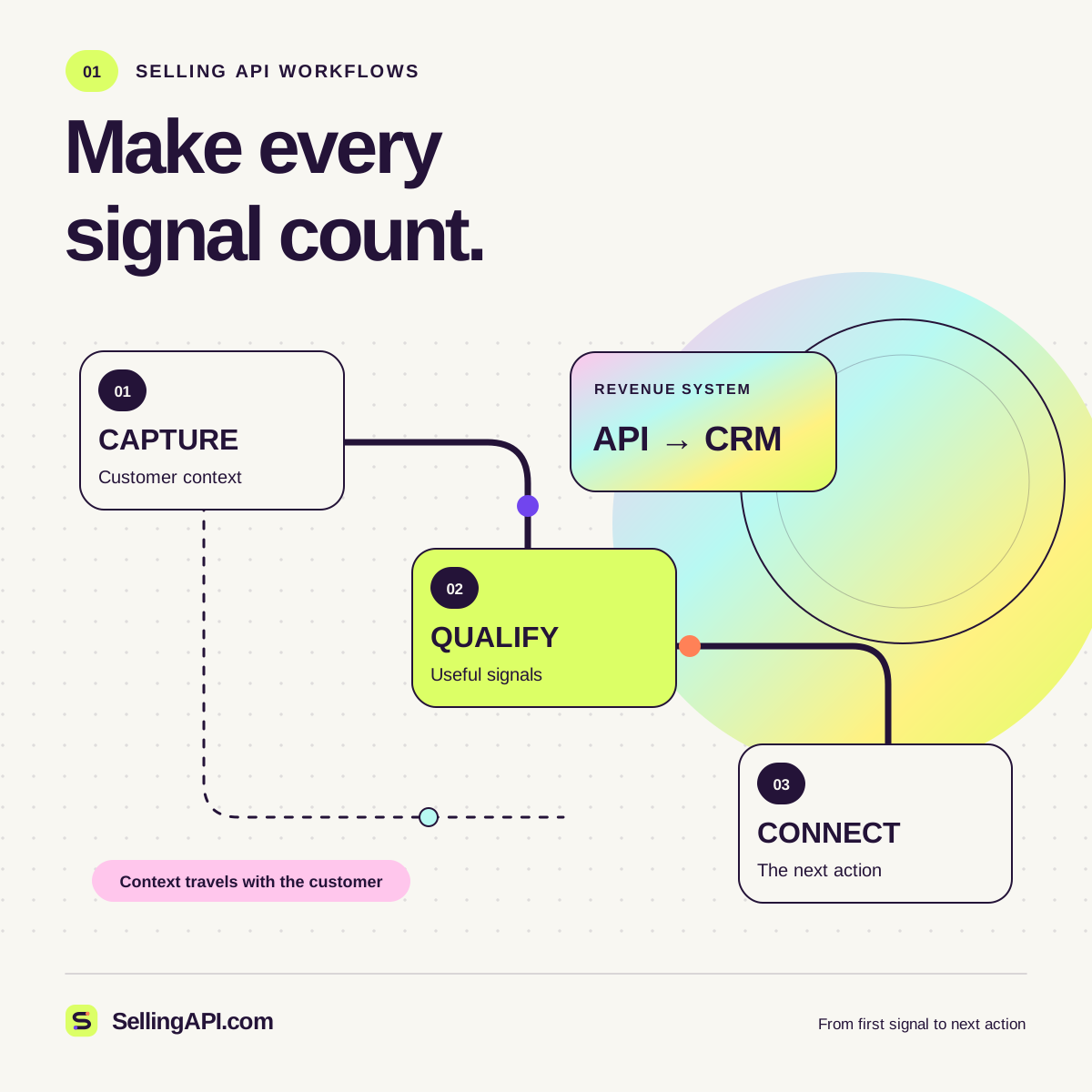
A selling API connects the software involved in a commercial conversation. A website captures an inquiry, a CRM records the relationship, a sales representative investigates the need, and a messaging service handles a requested follow-up. The useful integration is the agreement among these steps: which information moves, who can change it, and what should happen when a step fails.
The term describes a use case, rather than a universal technical standard. On SellingAPI.com, it is a way to explore sales architecture and practice with local demonstrations. A real implementation needs separately configured services, credentials, permissions and operational ownership.
Start with one broken handoff
Choose a specific problem before selecting endpoints. Perhaps website inquiries enter the CRM without an owner. Perhaps representatives cannot see whether a requested information pack was delivered. Write the desired outcome in plain language: every valid inquiry reaches an appropriate queue, carries its original context, and has an observable processing status.
Draw the smallest useful workflow around that outcome. Avoid connecting every field simply because it is available. A narrow integration is easier to explain, diagnose and change. Record what counts as completion and who handles exceptions; otherwise a technically successful request can still leave a customer waiting.
Define a contract people can understand
A data contract explains the meaning of a record, beyond its JSON shape. For an inquiry, useful fields might include an internal inquiry identifier, creation time, stated product interest, preferred contact channel and source reference. Distinguish required information from optional context. Decide whether an empty value means unknown, deliberately removed, or not applicable.
Use stable identifiers to connect records across systems. Names and job titles can change; a text match alone is a fragile identity strategy. Include a schema version so consumers can recognize meaningful changes. The CloudEvents project provides a common event format, which can be useful when several systems publish business events. Adopting a shared envelope still leaves you responsible for defining your own business fields.
An illustrative inquiry workflow
Consider a fictional company that receives a request for a product consultation. The following sequence is an architectural example, not a connected SellingAPI service:
- Validate the inquiry and assign an internal identifier.
- Save the original request and its stated communication preferences.
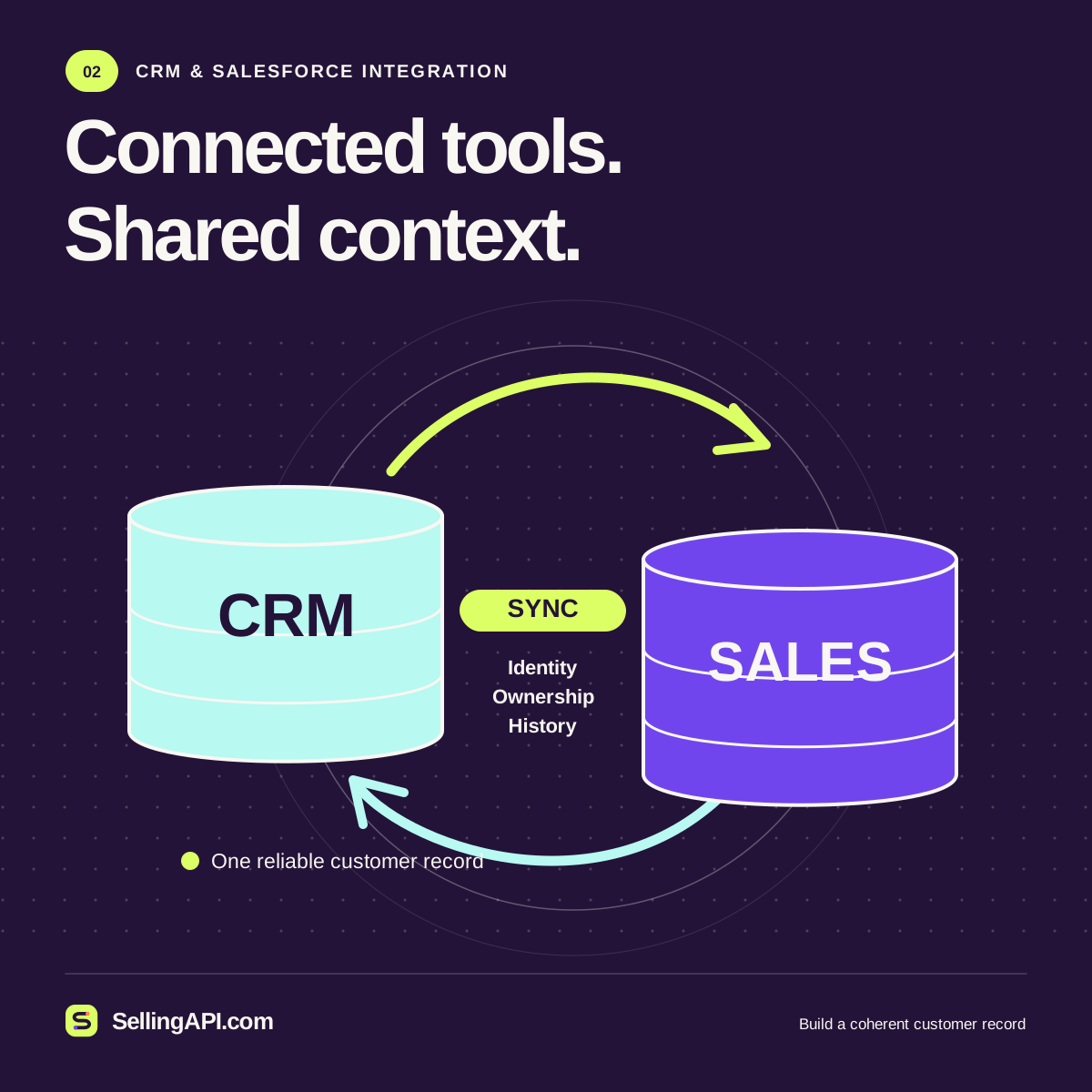
- Create or update the corresponding CRM record.
- Assign a review task using the team's documented routing policy.
- Prepare a response draft with the relevant product information.
- Let an authorized representative review and send the response.
Each step should record its outcome. A record might be accepted, waiting for CRM synchronization, ready for review, or blocked by missing information. These states let a representative see what happened without reading a developer log.
Decide where unfinished work lives. In this example, the intake service saves the inquiry before acknowledging receipt, then places the CRM update in a durable work queue. If the CRM is temporarily unavailable, the request remains visible and processing can resume. The representative should see that synchronization is pending rather than assume the inquiry disappeared. Store the intended action as well as the latest error, and make a manual retry resume that action. A button labelled “try again” should not create an entirely new inquiry or restart steps that already completed successfully. This makes recovery a continuation of the same business process.
Separate data ownership from access
Assign an authoritative system to important fields. The CRM might own relationship status, while a subscription service owns channel preferences. A workflow should read the authoritative preference immediately before sending; copying it once during intake can leave later decisions based on stale information.
Access also needs a clear boundary. The OAuth 2.0 authorization framework describes limited access through authorization and tokens. It does not decide which sales actions your organization should allow. Define those actions explicitly. A service that summarizes a conversation may need to read selected records while having no permission to export the database or send messages.
Design for retries and duplicate events
A network timeout leaves an awkward question: did the operation fail, or did its response get lost? Repeating a create request without a plan can create another task or another message. Use the provider's documented idempotency mechanism where available, and keep a durable internal operation identifier. Stripe's idempotent request documentation is a concrete example of how an API can make selected retries safe; its behavior should not be assumed for other services.
Event delivery needs similar care. Stripe's webhook guidance explains that events may arrive more than once and out of order. Treat these as realistic integration scenarios. Remember processed event identifiers, validate event authenticity using the provider's method, and prevent an old update from overwriting a newer business decision. Use bounded retries and a review queue when automatic recovery cannot resolve an error.
Make status visible at two levels
Technical monitoring should answer whether requests are failing, queues are growing, or authorization has expired. Business monitoring should answer whether inquiries are assigned, how long they wait for review, and which records require intervention. A healthy server does not prove the sales process is healthy.
Carry a correlation identifier through the workflow so related events can be traced. Keep logs useful without copying entire messages, access tokens or unnecessary personal information into them. Decide how long diagnostic records are needed, and give the operations team a clear procedure for investigating a single stalled inquiry.
Use AI for bounded assistance
An AI model can propose a category, summarize a request or draft an answer from approved product material. Give it a defined output structure and require supporting context where possible. A fluent paragraph should not become an approved discount, a contractual commitment, or a new fact about a prospect.
Separate suggestion from execution. Store the draft, the evidence used and the review result. Let reviewers correct a category or reject a proposed response. Those corrections provide a more useful improvement signal than simply counting generated messages. The workflow should also remain usable when a model is unavailable.
Release a workflow you can operate
Test a valid inquiry, missing information, a duplicate submission, an expired credential, a delayed event and a changed contact preference. Confirm that retries cannot create repeated customer actions. Give the team a pause control and a documented way to resume unfinished work.
Then evaluate the original handoff. Are records understandable? Can a representative find the request and its owner? Can an operator explain an exception? A selling API becomes valuable when it makes these answers clearer. More endpoints can follow once the first workflow is reliable, observable and useful to the people running it.