An OpenAI selling API project begins with a business event: a prospect asks a question, a seller finishes a meeting, or an opportunity needs a next step. The useful design question is what should happen next and what evidence makes that action reasonable. A model can contribute language and interpretation, while the surrounding application establishes identity, gathers records, checks permissions, and delivers the result.
Understand ChatGPT and an API integration
ChatGPT provides an interactive environment for working with an assistant. An API integration places model capabilities inside an application you design. OpenAI's text and prompting documentation explains how applications generate responses from supplied input. For a sales team, this could mean a draft appearing beside an opportunity record instead of a person copying information between separate windows.
Decide which experience the team needs before choosing an architecture. A seller exploring account strategy needs room for conversation. A queue processing meeting summaries needs consistent fields, ownership, and error handling. Confirm the access, billing arrangement, credentials, and workspace controls available for the actual integration; possession of a ChatGPT account should not serve as your integration specification. Keep these operational decisions explicit in the project brief.
Start with one useful sales workflow
Consider an inbound question about supporting regional sales teams. A sensible first workflow collects the prospect's question, retrieves approved product information, and drafts a response for the account owner. Its output includes what the prospect asked, the product facts supporting the answer, and any unresolved implementation question. This gives the seller something concrete to review without requiring an autonomous sales process.
Define the stopping point. If the request concerns a negotiated contract term, the workflow can prepare a handoff to the relevant colleague. If the product documentation is silent, it can ask a precise follow-up question. Write the acceptance criteria before choosing a model: the correct account, accurate product statements, appropriate tone, and no invented commitment. Those criteria turn a compelling demonstration into a testable product requirement.
Give the model bounded tools
OpenAI's function calling guide describes a loop in which a model requests a tool, application code executes the operation, and the result returns to the model. In a sales application, a tool might retrieve an opportunity or find an approved product document. The application should decide which records the current user may access before returning anything.
Make the available operations narrow enough to review. Retrieving account context, creating a draft, recording a note, and sending a message represent separate decisions. Each can have different permission and confirmation requirements. Do not let the wording of an external email grant access to a new account or a new operation. Tool arguments are a request to the application, and application rules determine whether that request is valid.
Build a small, trustworthy context packet
A practical account packet contains the current opportunity stage, relevant conversation excerpts, approved product references, and the specific task. Label where each item came from and when it was last checked. Keep the prospect's own statements distinct from a seller's interpretation. For example, a request for implementation details does not establish a confirmed purchase date.
Decide what the assistant can safely omit. An unrelated support history, private employee note, or old commercial proposal may add confusion without helping the question at hand. If two records disagree, preserve the disagreement and identify the owner who can resolve it. This keeps the reviewer from treating a polished summary as a reconciled database. Good context design makes evidence easy to inspect and missing information easy to notice.
Define the shape of the result
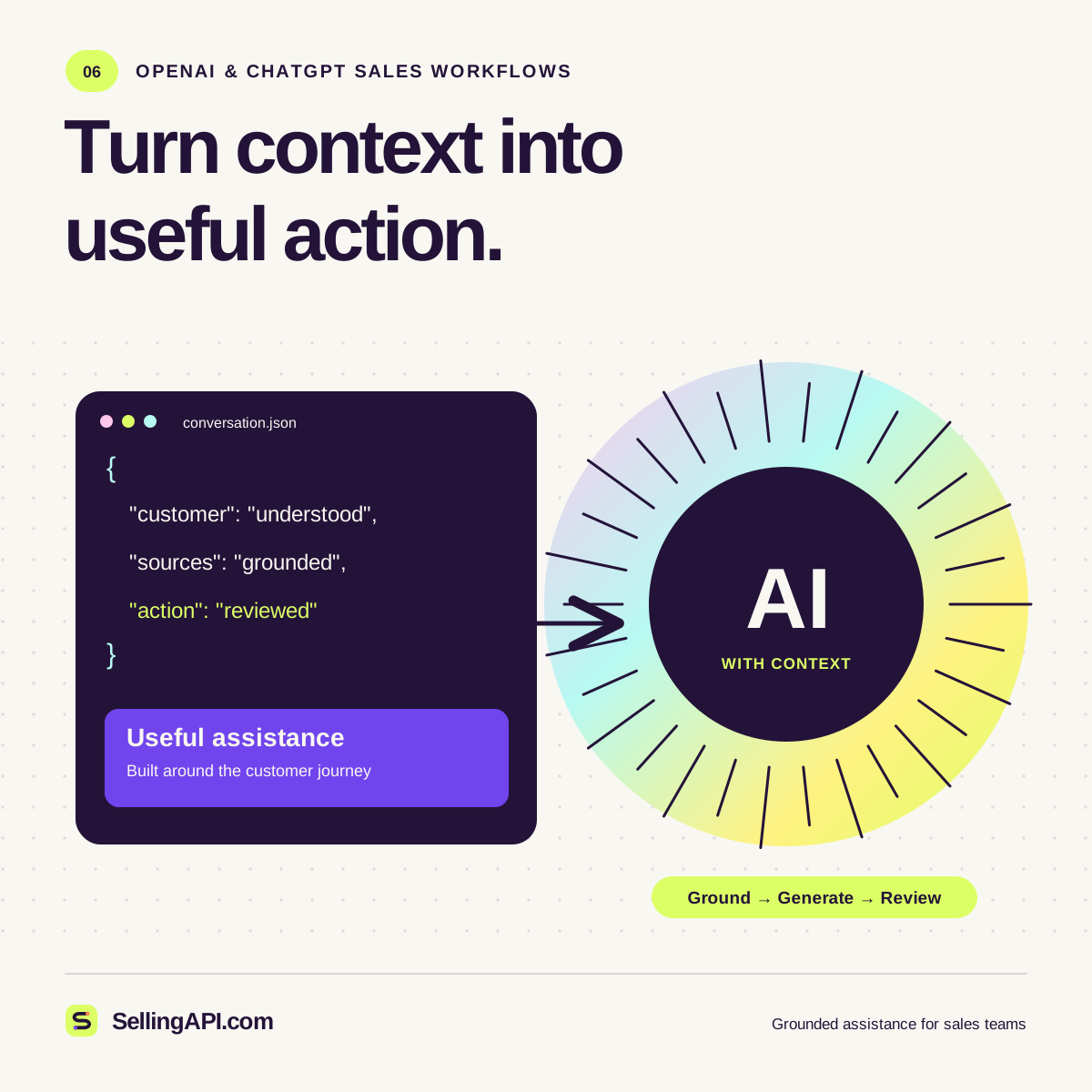
A useful output contract might include customer_request, verified_facts, open_questions, draft_reply, and suggested_owner. These are example application fields, not a SellingAPI.com endpoint. OpenAI's Structured Outputs documentation explains schema adherence and also notes that structured results can contain mistakes. Correct formatting therefore needs a separate factual review.
Design the interface around that distinction. Show supporting references beside the claims they justify. Display an unknown value as unknown, with an explanation of what would resolve it. A blank purchase date is often more useful than a plausible guess. The reviewer should be able to correct one field without rewriting the whole result, and the application should retain the corrected version as the proposed business record.
Treat failures as business events
A CRM timeout does not mean an account has no history. A failed document lookup does not mean a feature is unavailable. Define separate outcomes for missing data, temporary service failure, insufficient permission, and contradictory evidence. Give the seller a short, actionable explanation and preserve the original task so work can continue later.
For operations that change records, decide how repeated requests are handled. A retry should not create several identical follow-up tasks. Keep a stable operation identifier and confirm the result through the system that owns the record. If a message could not be delivered, the interface should show that state accurately. These details matter because a salesperson plans subsequent work around what the application says has actually happened.
Make proposed actions reviewable
Design the review screen before connecting the final business action. A seller reviewing an opportunity update should see the current value, proposed value, supporting evidence, and reason for the change. A seller reviewing a message should see its exact recipients and final text. The approval should refer to that concrete version, so later edits cannot silently change what was approved.
Imagine a meeting summary suggests moving an opportunity into a later stage. The underlying note says only that the customer requested a technical workshop. Present that evidence beside the recommendation and allow the seller to keep the current stage while creating a workshop task. This exposes the difference between a useful observation and an unsupported business inference. It also gives the team a practical way to improve the workflow: review why a suggestion was changed, then adjust the relevant rule, context, or instruction.
Measure results that sellers can verify
Build a review set from representative, appropriately handled examples: clear requests, ambiguous accounts, stale documentation, and unusual objections. Ask reviewers to score factual support, completeness, and usefulness independently. A fluent answer can still miss the customer's actual question. Track the time needed to reach an acceptable final draft as well as the number of drafts generated.
Release the workflow gradually and watch corrections. If sellers repeatedly replace the suggested owner, inspect routing data. If reviewers remove confident claims, inspect retrieval and instructions. Keep an ordinary manual path available while making improvements. Before deployment, follow OpenAI's production guidance on protecting credentials and separating development from production. The lasting value comes from a workflow the team can understand, operate, and improve.